


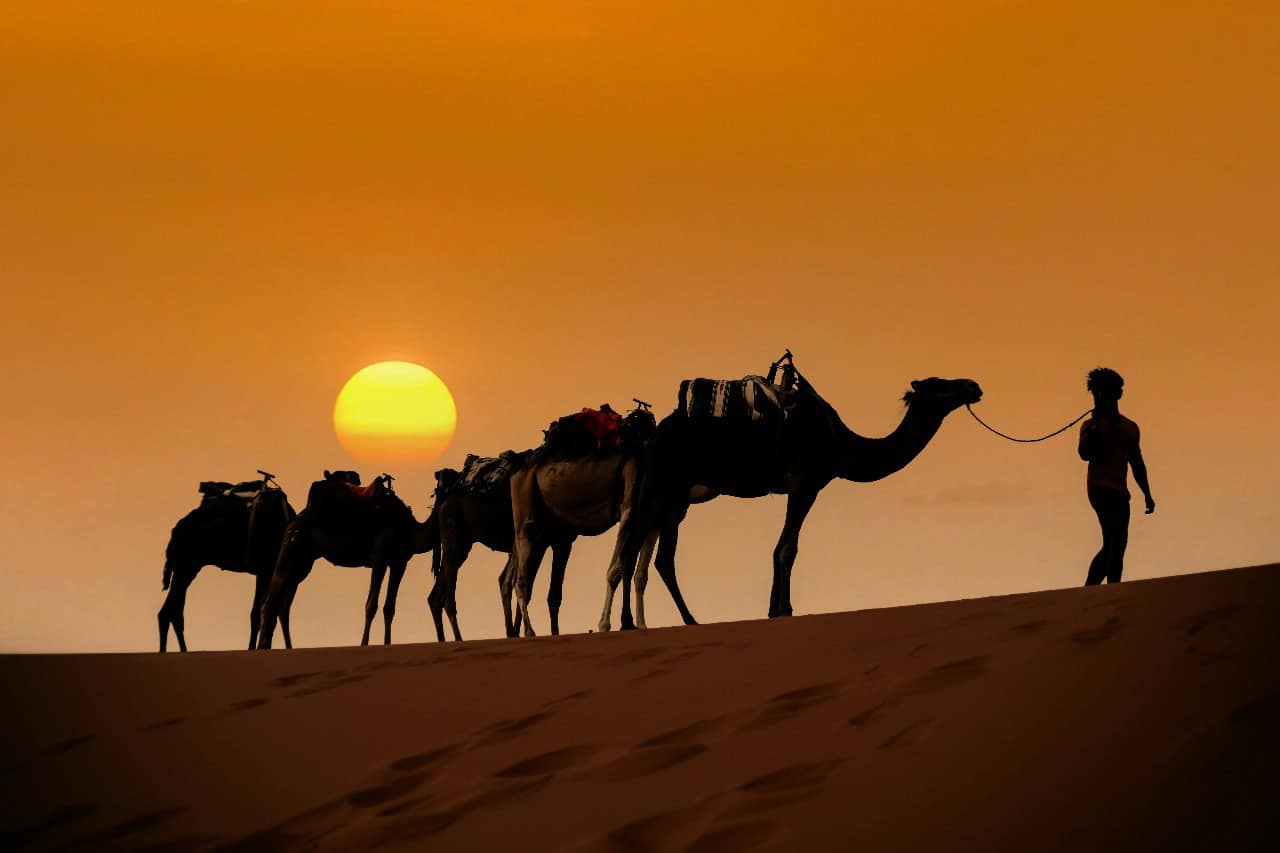
The drive from Marrakech to the Sahara is one of the most beautiful road trips in Morocco. In three days you cross the High Atlas Mountains, walk through a UNESCO-listed kasbah, follow green valleys and red gorges, and spend a night among the golden dunes of Erg Chebbi near Merzouga. Here is how the trip works, day by day, with practical tips from our team.
Quick facts
- Distance: about 550 km each way from Marrakech to Merzouga
- Driving: more than 10 hours each way, which is why the trip is split over 3 days with stops along the road
- Highest point: the Tizi n’Tichka pass in the High Atlas, around 2,200 m above sea level
- The dunes: Erg Chebbi stretches for about 28 km, with dunes up to around 150 m high
- Best months: March to May and late September to November
Why 3 days is the classic choice
Merzouga is far from Marrakech, so the journey is part of the experience. A 3-day trip gives you one night in the Dades Valley, one night in a desert camp, and a full day to drive back. It is the shortest way to reach the big dunes of Erg Chebbi without rushing, and it suits couples, families and small groups. If you have more time, a 4-day trip lets you travel at a slower pace and add more stops.
Day 1: Marrakech – High Atlas – Ait Ben Haddou – Dades Valley
We pick you up from your hotel or riad in Marrakech in the morning and drive into the High Atlas Mountains. The road climbs through Berber villages, walnut trees and terraced fields to the Tizi n’Tichka pass, the highest main road pass in Morocco. There are plenty of stops for photos along the way.
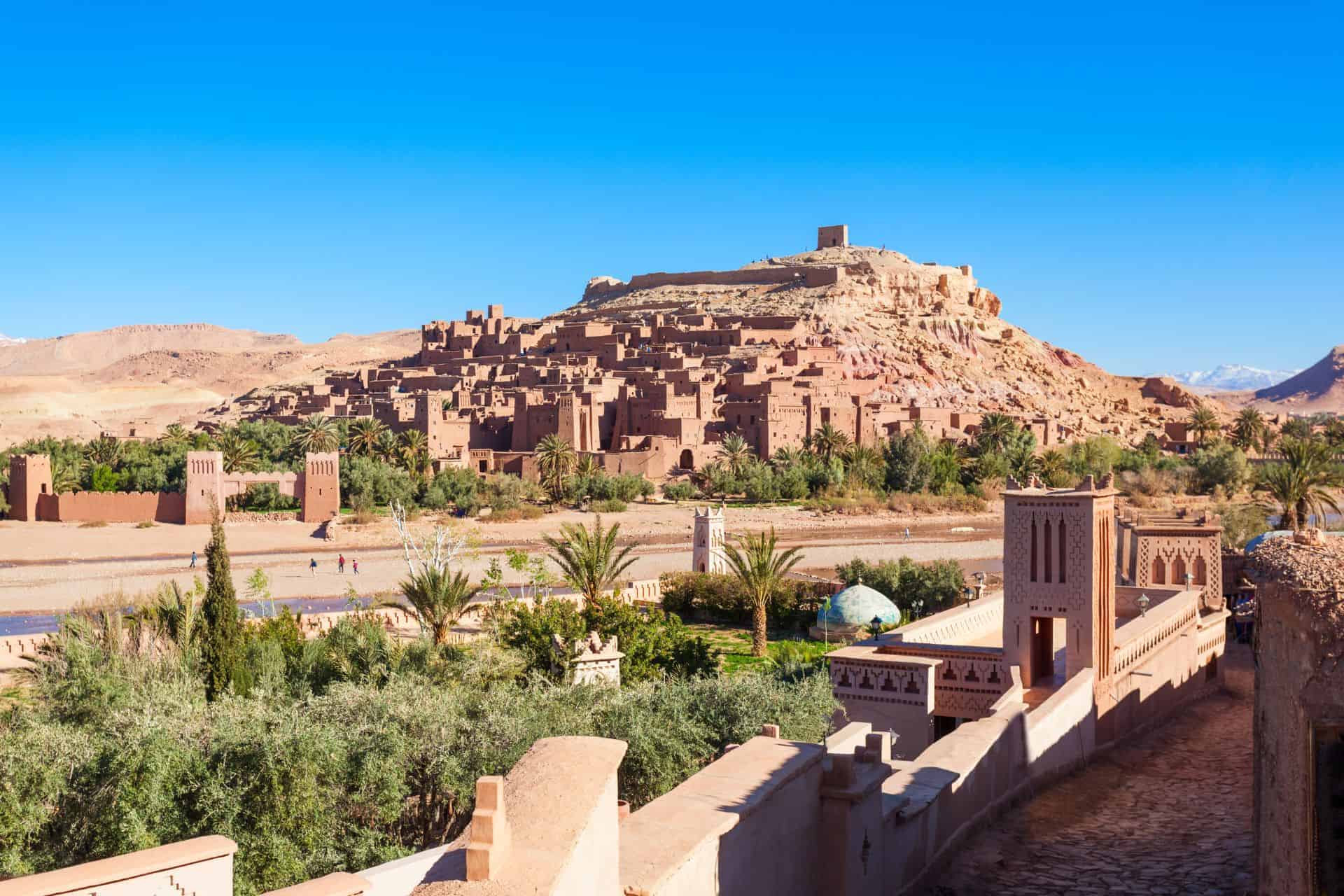
On the other side of the mountains you reach Ait Ben Haddou, a fortified village (ksar) of earthen houses and towers that has been a UNESCO World Heritage site since 1987. You can walk up through its narrow alleys to the top of the hill for a wide view over the valley. The ksar has also appeared in many well-known films and series.
The afternoon continues past Ouarzazate to the Skoura oasis, with its palm groves and the Kasbah Amridil, and then along the “Road of a Thousand Kasbahs” to the Dades Valley, where you spend the night in a hotel.
Day 2: Dades Valley – Todra Gorge – Merzouga – night in the desert
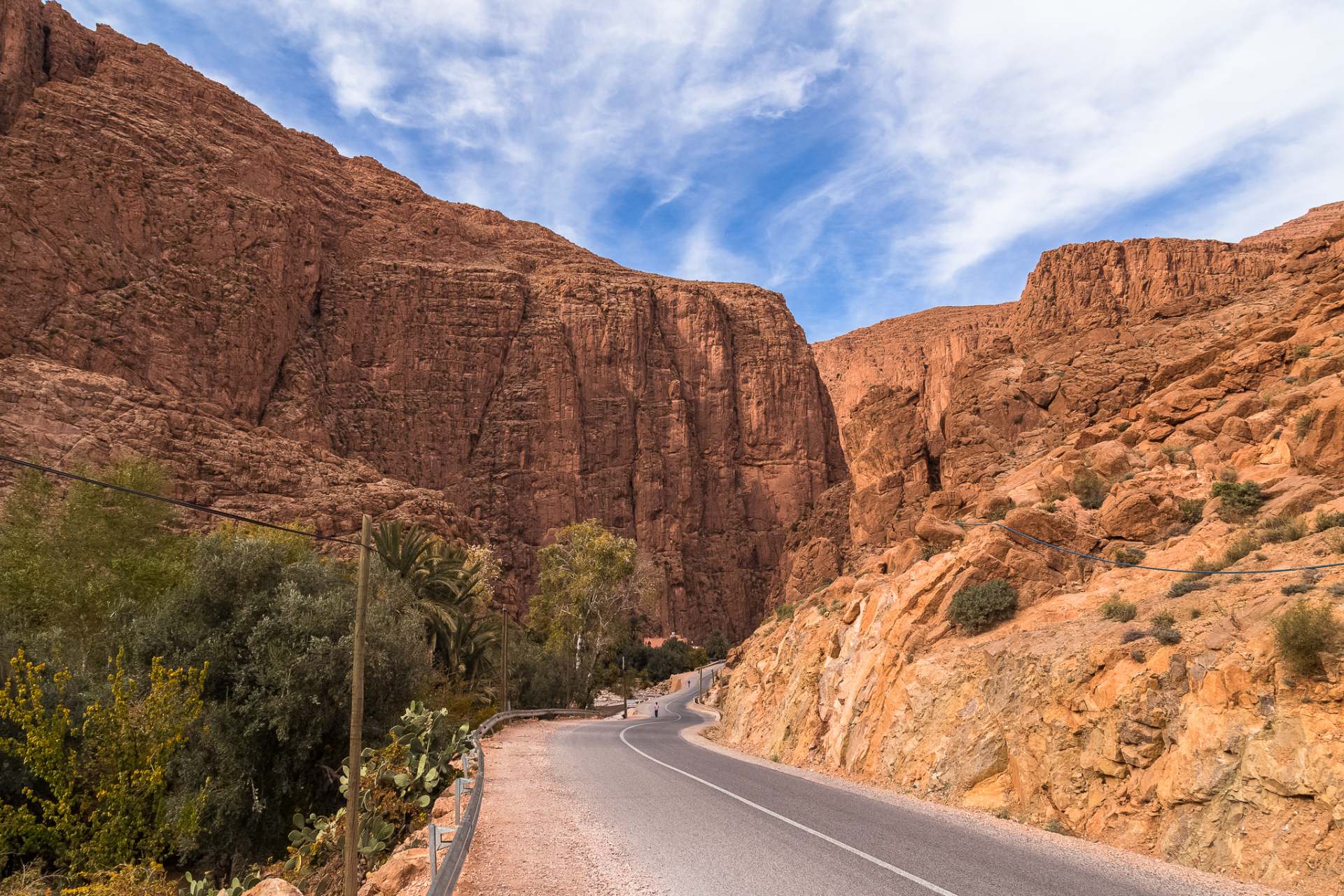
After breakfast you drive through the Dades Valley to Tinghir and the Todra Gorge, a narrow canyon with high rock walls and a clear stream at the bottom. It is a nice place to stretch your legs before the last part of the road.
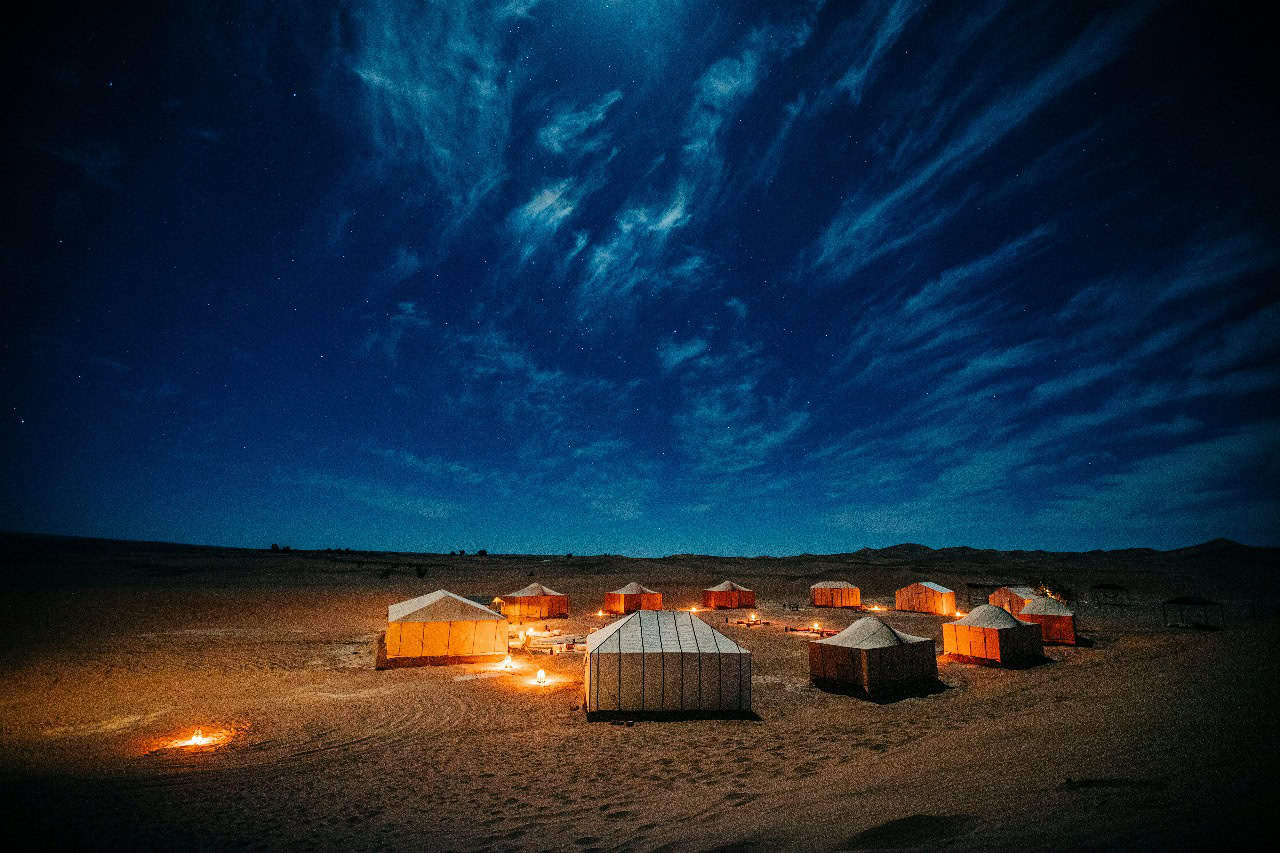
In the late afternoon you arrive in Merzouga, at the edge of the Erg Chebbi dunes. This is the highlight of the trip: a camel ride at sunset across the dunes to the desert camp, while the sand changes from gold to orange and pink. In the evening you have dinner at the camp, often with traditional music around the fire, and a night under one of the clearest night skies you will ever see.
Day 3: Sunrise in the Sahara – back to Marrakech
Wake up early to watch the sunrise over the dunes, then ride back to Merzouga for breakfast. The return drive to Marrakech is long, so we leave in the morning and travel back through the valleys, past Ouarzazate and over the High Atlas again, with stops for lunch and breaks. You arrive in Marrakech in the evening.
When is the best time to go?
The desert can be visited all year, but the weather changes a lot between seasons:
- Spring (March to May) and autumn (late September to November) are the most comfortable seasons, with warm days and pleasant evenings.
- Summer (June to August) is very hot in the Sahara, and daytime temperatures can go above 45°C. Camel rides are done early in the morning and at sunset.
- Winter (December to February) has sunny, mild days, but desert nights are cold and can drop close to freezing, so bring warm layers.
What to pack
- Layers: a light jacket or fleece for the mountains and the desert night
- A scarf or buff to protect your face from sun and sand
- Sunglasses, sunscreen and a hat
- Comfortable closed shoes for walking on the dunes
- A small backpack for the night at the camp, so you can leave your big bag in the car
- A power bank, as charging can be limited in the desert
Practical tips
- Motion sickness: the Tizi n’Tichka road has many bends. If you get car sick, take something before the drive and sit in the front.
- Cash: carry some Moroccan dirhams for drinks, tips and small purchases along the way.
- Private or shared: on a private tour you travel only with your own group and can stop where you like. Shared tours are cheaper but follow a fixed schedule with other travellers.
- Not enough time? If you only have one or two days, Zagora is closer to Marrakech, but its dunes are much smaller than Erg Chebbi.
Frequently asked questions
How far is Merzouga from Marrakech?
About 550 km by road. The drive takes more than 10 hours without stops, so it is best split over two days each way or done as a 3-day trip with a night in the Dades Valley.
Can I visit Merzouga in a day trip from Marrakech?
No. The distance is too long for a day trip. The minimum is 3 days and 2 nights.
Is the trip suitable for children?
Yes, many families do this trip. The drives are long, so a private tour is easier because you can stop whenever the children need a break.
Where do we sleep?
The first night is in a hotel in the Dades Valley and the second night in a desert camp in the Erg Chebbi dunes.
Ready for the Sahara?
Our 3 Day Desert Tour from Marrakech to Merzouga follows this route with a private driver and can be adapted to your dates and group. Contact us or chat with us on WhatsApp, and Zouhair will help you plan your trip.
[…] our day-by-day guide Marrakech to Merzouga in 3 days, or see our 3 Day Desert Tour from Marrakech. Contact us with your dates and Zouhair will tell you […]
[…] The downside is distance. Merzouga is about 550 km from Marrakech, so the minimum is a 3-day trip. The good news is that the road is one of the most beautiful in Morocco, with the High Atlas, Ait Ben Haddou, the Dades Valley and the Todra Gorge along the way. You can read the full route in our guide Marrakech to Merzouga in 3 days. […]